Listen
Make a possibility
What happens if a rhythm has another layer, a different cycle or a new sound?
MusEDLab / Learning through making
Make an idea playable.
Learn by changing it.
Describe a musical idea to an AI coding tool. Try what it builds, listen closely and keep revising. The experiment is a way to ask what music—and learning—could become.
01 / Start with a question
Vibe coding brings conversation with AI into the process of making software. For us, the interesting question is what we can learn by making, playing and revising a musical tool.
A working result is a beginning. Look inside the code, ask how it works, test your assumptions and change one thing at a time. A tool may run and still make unexpected musical choices or leave someone out.
Listen
What happens if a rhythm has another layer, a different cycle or a new sound?
Learn
Could a new interaction help someone explore, teach or participate?
Reflect
What did you change, how did you test it, and what surprised you?
Start from MusEDLab’s tools or a musical question of your own. Check the original code and asset licenses before reusing them, and credit your sources.
02 / Our Scratch roots
Learning by remixing has a history here.
MusEDLab’s Scratch projects let learners play with musical ideas, inspect the blocks and reshape how a tool behaves. These earlier projects used block-based programming. Today’s AI-assisted experiments offer another route into the same cycle of making, listening and revising.
William Payne and S. Alex Ruthmann examined the possibilities and limitations of music making in Scratch in Music Making in Scratch: High Floors, Low Ceilings, and Narrow Walls? (May 16, 2019).
Rhythm
By alexruthmann
Shared January 2, 2019
Open the project and use Scratch’s “See inside” to explore the blocks.
Pitch & play
By alexruthmann
Shared January 2, 2019
Explore another route from a musical interface to editable code.
Variation
By alexruthmann
Created December 2016
Shared January 2017
Look at how a musical idea can become a playground for variation.
Follow a Groove Pizza remix chain: alexruthmann’s original → remix by Degazio → remix by kylewu0715.
These are independently shared community projects, credited by their public Scratch handles. Project links and public metadata were verified; playback has not been tested.
03 / Listen to the possibilities
Compare what each design makes easier to hear, see or do.
Independent AI-assisted experiment / Ethan Hein
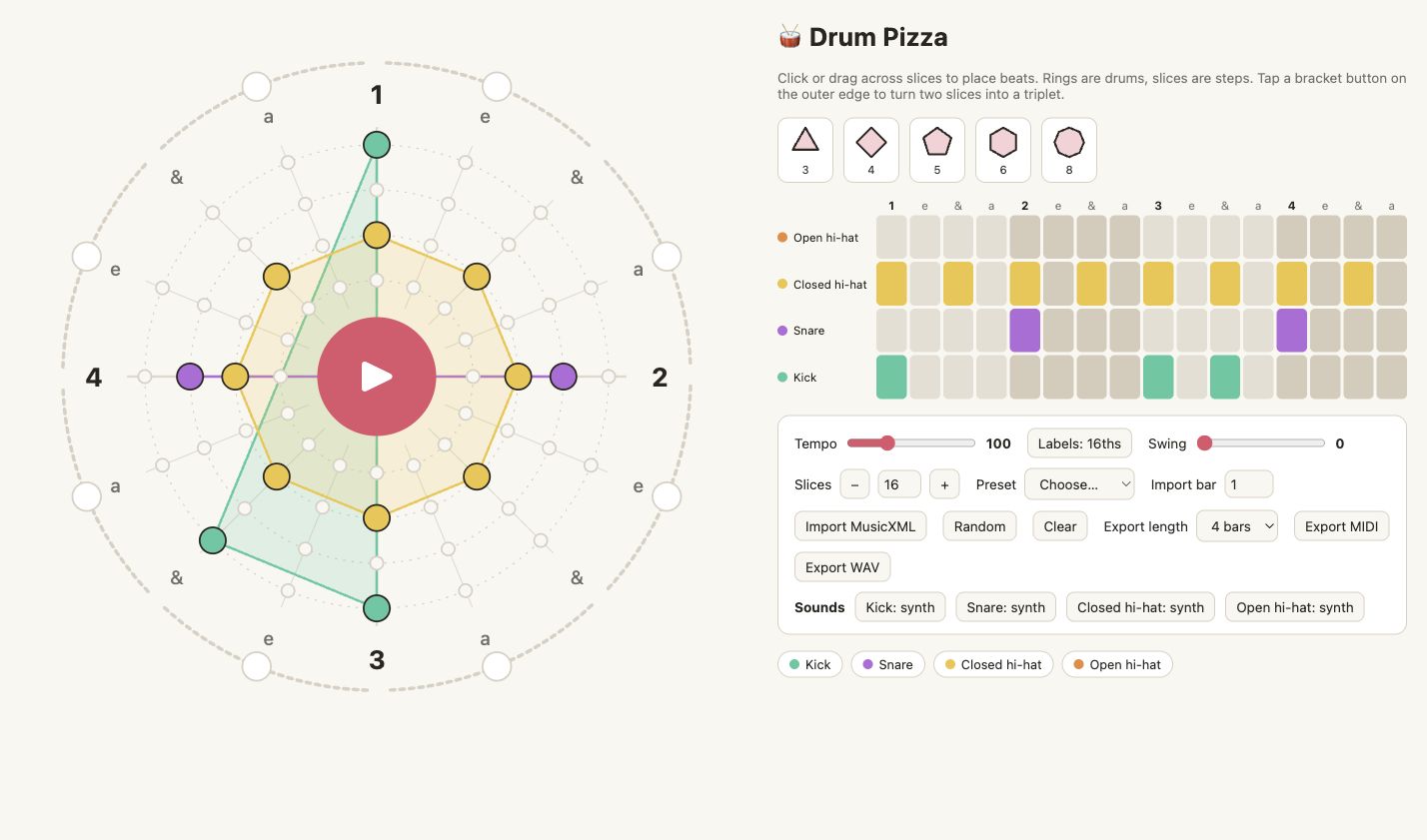
Ethan Hein’s independent, vibe-coded Drum Pizza explores four drum layers, triplets and custom WAV or MP3 sounds. Its playful character recalls the early Groove Pizza prototypes before the formal 2016 Herbie Hancock Math Science Music launch.
Try a question: How does changing a subdivision or adding your own sound change the groove?
An independent prototype maintained by its creator. This feature shares existing work as inspiration; it does not announce a submission or participation in this initiative.
Earlier research / Access
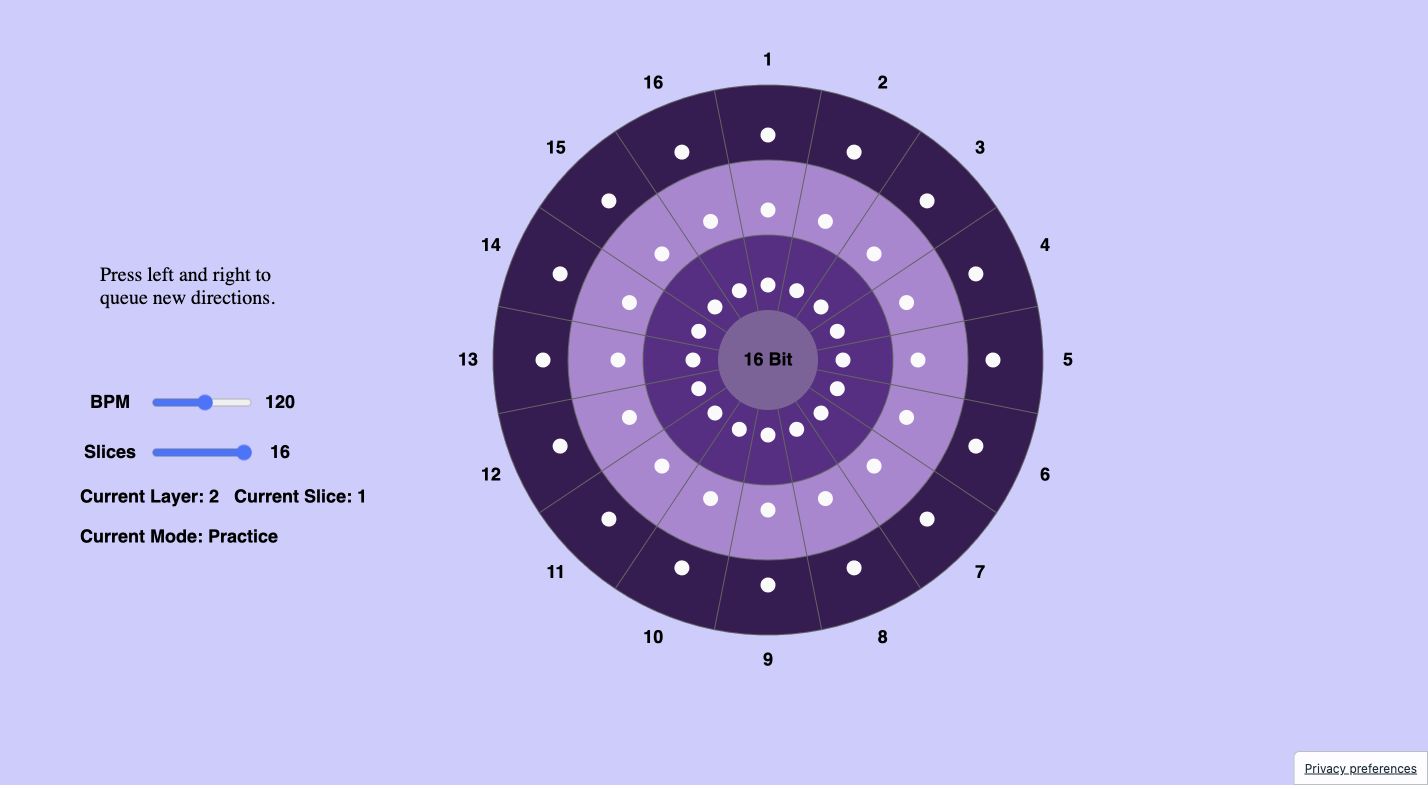
A research prototype exploring keyboard control, built-in speech and sonification for rhythm making.
Try a question: What changes when a rhythm can be navigated through keys and sound?
Earlier research / Rhythm
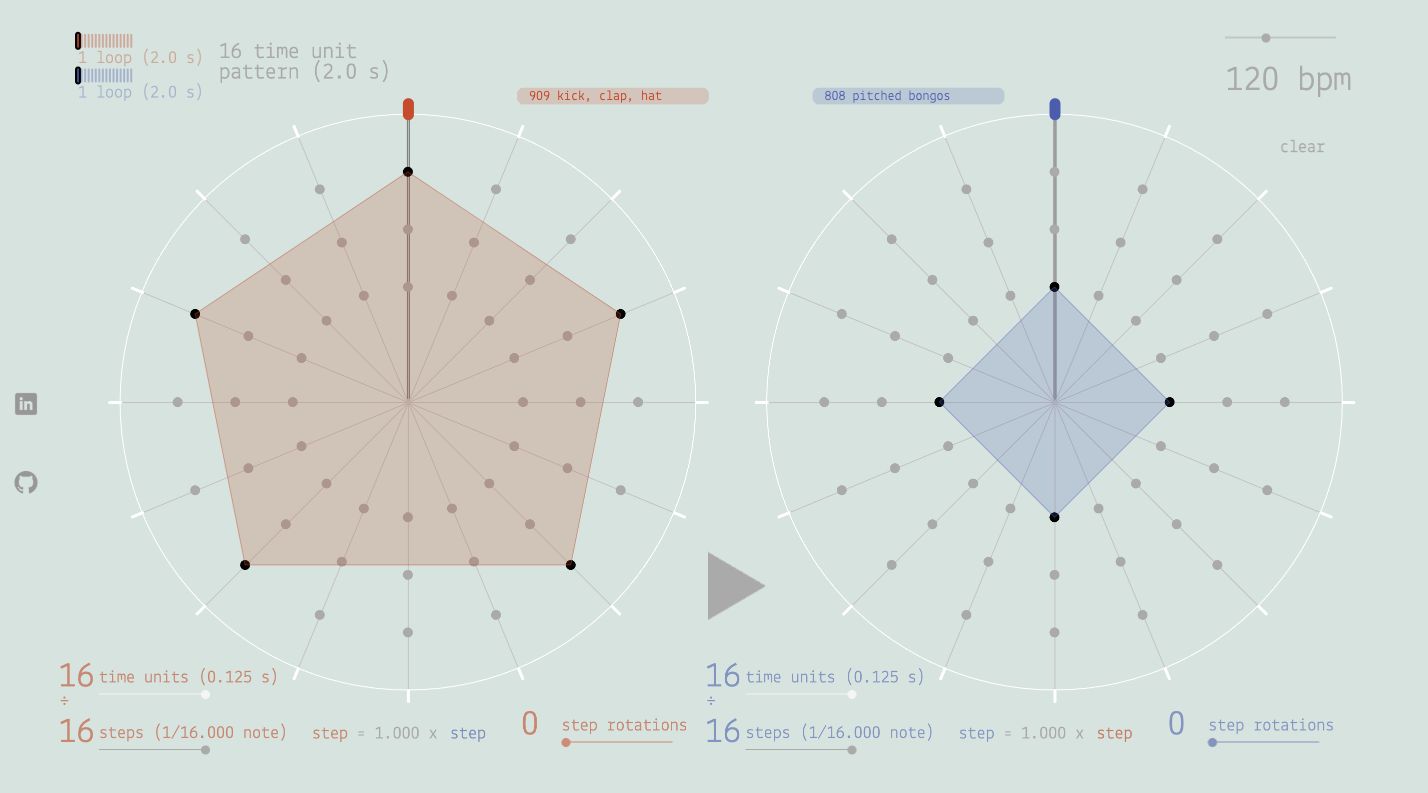
Tyler Bisson’s master’s project investigates circular sequencing for polyrhythm and polymeter.
Try a question: What happens when two patterns have different step counts or cycle lengths?
Accessible Groove Pizza and Groove Pizzeria are earlier research projects shown as design precedents; they are not presented as AI-generated tools. See the Groove Pizza family for the established instrument and more history.
Bisson, Tyler J. (2018). Groove Pizzeria: Designing a Circular Step Sequencer for Polyrhythm and Polymeter. Master of Music in Music Technology thesis, NYU Steinhardt, November 26, 2018. Advisor: Dr. Alex Ruthmann. Original, unchanged PDF; 89 pages.
Hein, Ethan (2013). Designing the Drum Loop: A constructivist iOS rhythm tutorial system for beginners. Thesis presentation, December 17, 2013; 18 slides on SlideShare.
04 / Community Remixes
Submissions are not open yet
We are preparing an on-site submission form. It is not accepting entries yet. In the meantime, build an experiment and document what you discover.
We welcome musical and teaching questions from educators, musicians, students and creative coders. A future submission should include:
Only share material you have permission to display. Leave out private recordings, student names and other personal data.
This initiative also supports MusEDLab’s developing NOHME chapter on vibe coding. Any future research participation or use of quotations would require a separate invitation and consent; display in a showcase does not provide research consent.
You can browse without optional Google Analytics. Videos and other embeds load only when you click them.